Prototyping & Testing · 2024
Integrative Design of Biomedical Products
Developed an intramedullary stent to enhance rib stabilization for flail chest patients, minimizing invasiveness while dynamically supporting respiratory function.
- Medical device design
- Requirements analysis
- Simulation
- Institution
- University of Twente
- Year
- 2024
- Category
- Prototyping & Testing
Overview
Flail chest, characterized by multiple fractured ribs, causes paradoxical chest wall movement leading to ineffective breathing and complications like hypoxia. The current solution involves rib fixation surgery, but there's a need for less invasive and more adaptable stabilization methods.
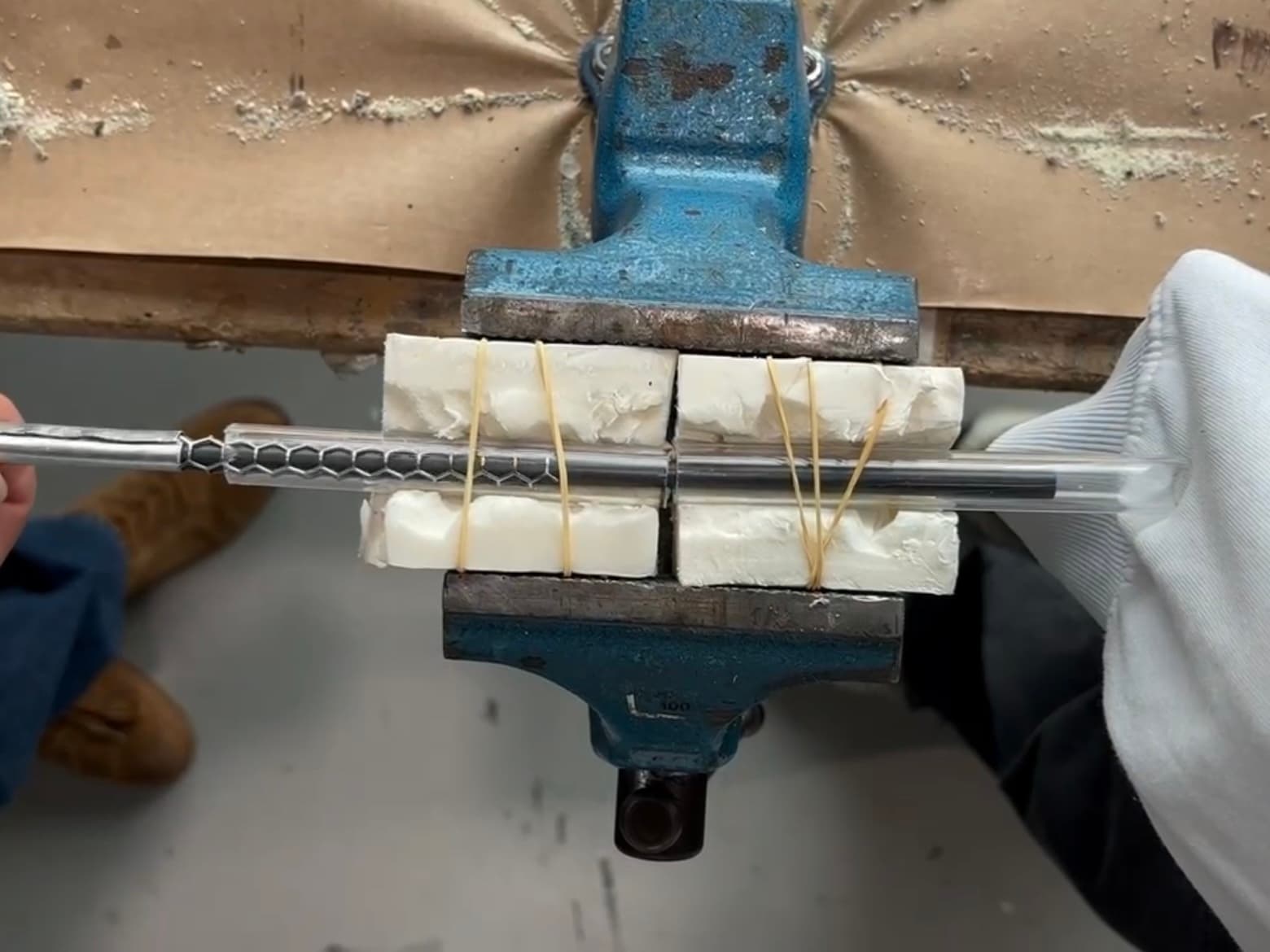
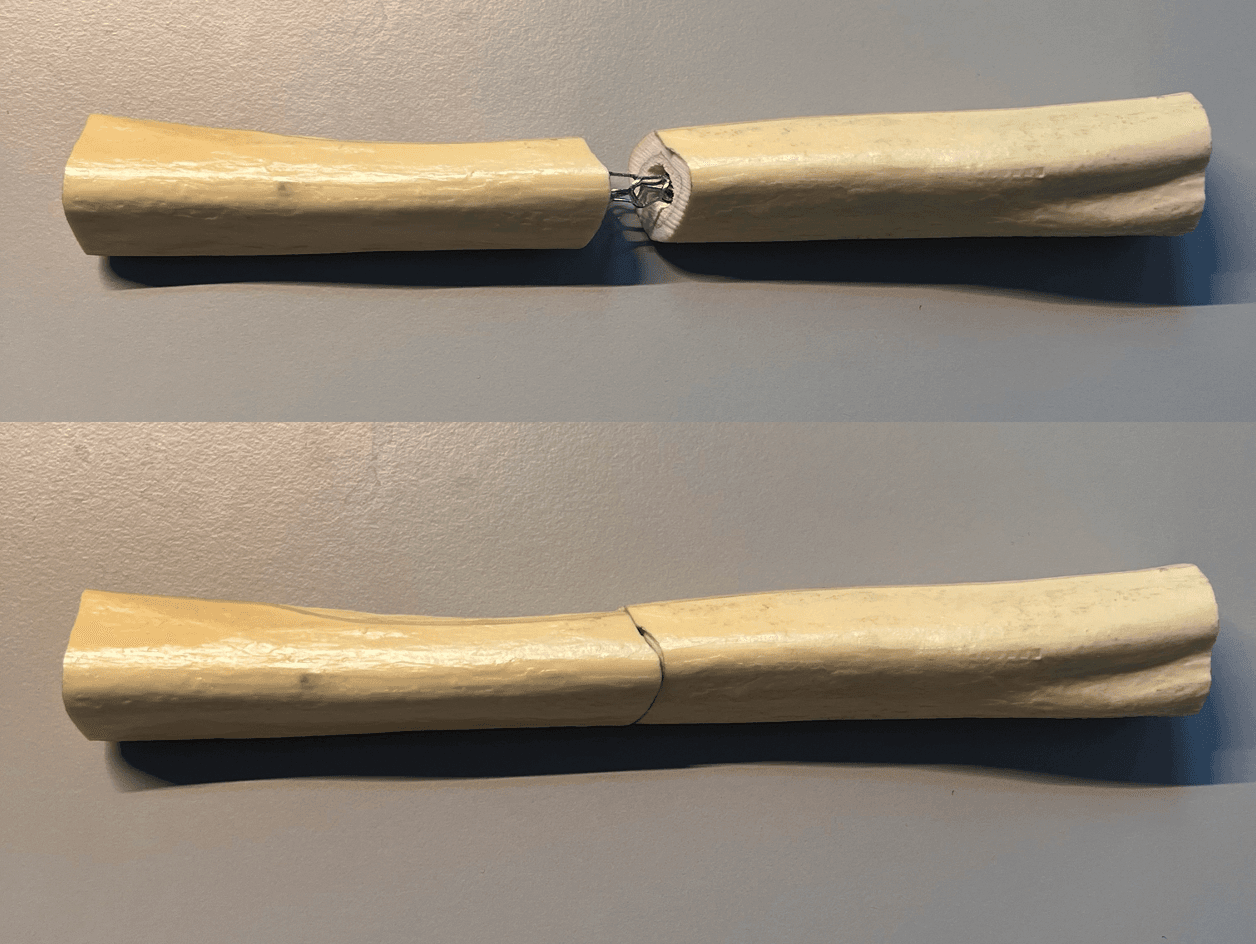
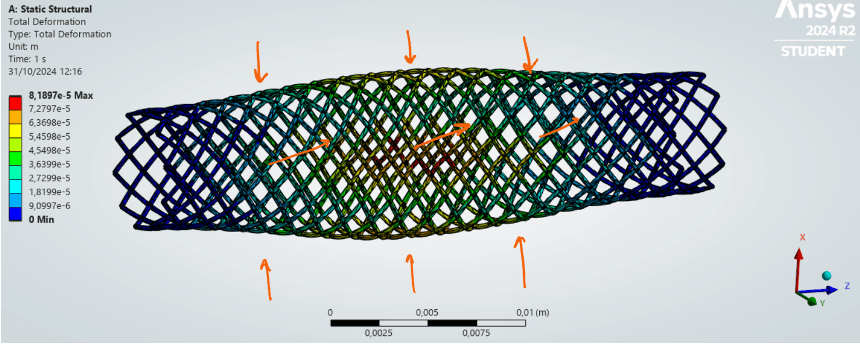
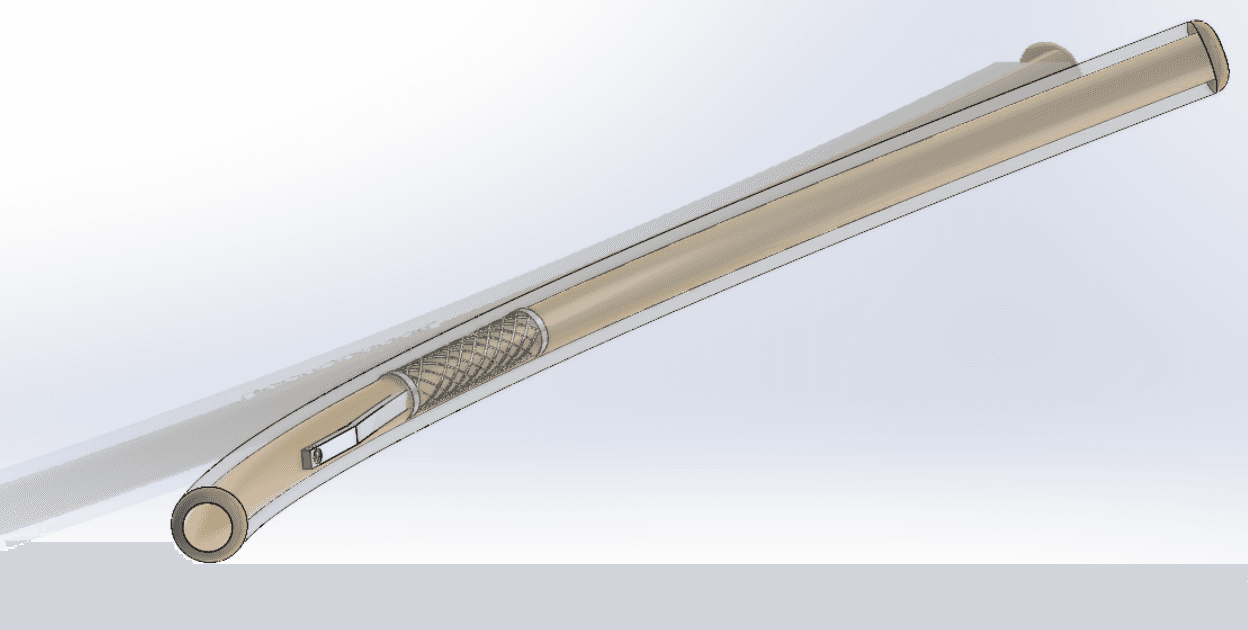
This project focused on developing a rib fixation device that enhances stabilization while actively supporting natural respiratory function. The solution chosen was an intramedullary stent, a minimally invasive device implanted within the rib, made of nithinol, a shape-memory nickel-titanium alloy, allowing the stent to provide robust yet flexible support that adapts to the natural movement of the chest. Simulations in SolidWorks and low-fidelity prototypes confirmed its structural integrity under respiratory stresses. This innovative approach holds the potential to significantly improve patient outcomes in rib stabilization surgery.
Challenges
- 01Addressing paradoxical chest wall movement (inward during inhalation, outward during exhalation)
- 02Balancing effective stabilization with preservation of natural respiratory function
- 03Minimizing surgical invasiveness and postoperative complications compared to existing plating systems
- 04Selecting a material that is biocompatible and dynamically adaptable to chest movement (Nitinol)
Outcomes
- 01Developed an intramedullary stent as the most promising solution after comprehensive concept evaluation (using Tom Gilb and Harris profile methods)
- 02Utilized Nitinol (nickel-titanium alloy) for its shape-memory and biocompatible properties
- 03Confirmed structural integrity under respiratory stresses via SolidWorks simulations and low-fidelity prototypes
- 04Designed a solution that supports respiratory mechanics while stabilizing the fracture
Technologies & skills
- Medical Device Design
- Concept Evaluation (Harris Profile)
- Requirements Analysis (Tom Gilb Method)
- SolidWorks Simulation
- Prototyping
Gallery